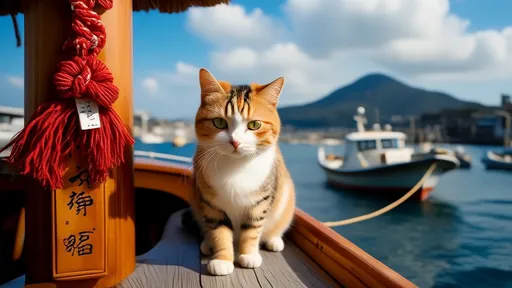
In the bustling ports of Japan, where the sea meets the land, an unexpected guardian watches over the sailors and fishermen—the calico cat. Known for their striking tri-colored coats, these feline companions have long been regarded as symbols of good fortune among seafarers. Their presence aboard ships is not merely coincidental; it is deeply rooted in tradition, superstition, and an unshakable belief that these cats bring luck, safety, and prosperity to those who brave the unpredictable waters.
The connection between calico cats and sailors dates back centuries. Japanese fishermen, in particular, have held a steadfast belief that these cats possess an almost mystical ability to ward off misfortune. Their distinctive fur, a patchwork of black, orange, and white, is said to mirror the colors of the sea, the sun, and the foam of waves—a natural omen of harmony with the ocean. Many crews would refuse to set sail without a calico cat onboard, fearing that the absence of their feline protector might invite storms or poor catches.
Beyond superstition, calico cats served practical purposes on ships. They were expert hunters, keeping rodent populations in check and protecting precious cargo from damage. In an era when food supplies were limited, their role in preventing rats from contaminating grains or chewing through ropes was invaluable. But their contributions extended further—these cats became companions to sailors during long, isolating voyages, offering comfort and a semblance of home amid the vast, lonely expanse of the sea.
The reverence for calico cats is intertwined with broader Japanese cultural beliefs. In Shintoism, animals are often seen as messengers of the gods, and cats, in particular, are thought to possess spiritual significance. The maneki-neko, or "beckoning cat," a common talisman in shops and homes, shares a symbolic lineage with the seafaring calico. Both are believed to attract good luck and wealth, though the calico’s role is uniquely tied to the dangers and uncertainties of maritime life.
Stories abound of calico cats saving ships from disaster. One famous tale tells of a cat that reportedly predicted a violent storm by behaving erratically, prompting the crew to delay their departure and avoid catastrophe. Another legend describes a calico cat leading a lost ship to safety by leaping onto a rock and guiding the vessel to shore. Whether these accounts are factual or folklore, they underscore the deep trust sailors placed in their feline guardians.
Even today, the tradition persists in some fishing communities. Modern sailors may no longer rely on cats for pest control, but the symbolic importance remains. Some vessels still carry calico figurines or keep portraits of them in the wheelhouse as a nod to the old ways. The cats have also found their way into maritime art, appearing in ukiyo-e prints and ship carvings as enduring emblems of protection and prosperity.
The calico’s legacy is a testament to the intersection of practicality and spirituality in Japanese seafaring culture. These cats were more than just crew members—they were talismans, companions, and silent witnesses to the triumphs and tragedies of life at sea. In a world where the ocean’s whims could mean the difference between life and death, the calico cat stood as a small but steadfast beacon of hope.

By /Jun 12, 2025

By /Jun 12, 2025
By /Jun 12, 2025
By /Jun 12, 2025
By /Jun 12, 2025
By /Jun 12, 2025

By /Jun 12, 2025

By /Jun 12, 2025

By /Jun 12, 2025

By /Jun 12, 2025

By /Jun 12, 2025

By /Jun 12, 2025

By /Jun 12, 2025
By /Jun 12, 2025

By /Jun 12, 2025
By /Jun 12, 2025
By /Jun 12, 2025