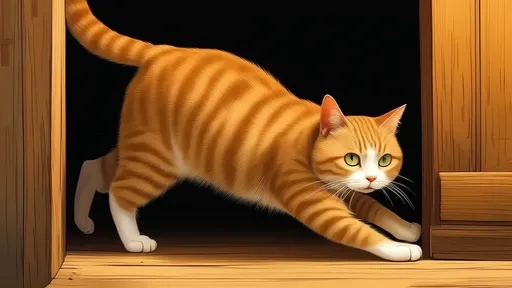
The mystery of how cats seem to defy the laws of physics by slipping through impossibly narrow spaces has long fascinated both pet owners and scientists alike. Unlike humans, whose rigid skeletal structure limits flexibility, cats possess an almost supernatural ability to compress their bodies. This phenomenon, often referred to as the "disappearing clavicle" trick, is rooted in their unique anatomy and evolutionary adaptations.
The Floating Clavicle: A Key to Feline Contortion
At the heart of this ability lies the feline clavicle, or rather, the lack thereof. Unlike humans, whose clavicles are fully developed and anchored to the sternum, cats have clavicles that are small, floating, and unattached to other bones. This evolutionary quirk allows their shoulders to move independently, granting them an extraordinary range of motion. When a cat needs to squeeze through a tight space, its shoulder blades can rotate and shift, effectively narrowing its profile.
Beyond the Clavicle: The Role of Muscle and Tendon Flexibility
But the clavicle is only part of the story. Cats also owe their contortionist skills to their highly flexible musculature and tendons. Their spine, composed of over 50 vertebrae (compared to a human's 33), is incredibly supple, enabling them to twist, bend, and elongate their bodies with ease. This spinal flexibility, combined with powerful core muscles, allows cats to redistribute their mass as needed, further aiding their passage through narrow openings.
Evolutionary Advantages: Why Cats Developed This Trait
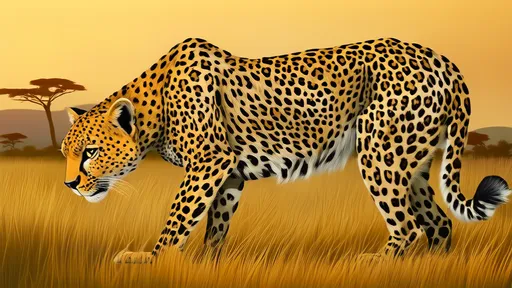
This remarkable ability didn't emerge by chance. In the wild, a cat's survival often depends on its capacity to escape predators, chase prey into tight burrows, or find shelter in confined spaces. Over millennia, natural selection favored felines with greater skeletal flexibility, leading to the modern housecat's almost boneless appearance when slipping under doors or through gaps in fences. It's a trait shared by many wild felids, from lithe cheetahs to elusive jungle cats.
The Physics of Feline Compression
When observing a cat navigating a small opening, several physical adaptations become apparent. First, they typically turn their heads sideways to reduce width. Then, they sequentially compress their ribcage (which is more barrel-shaped than human ribs) and tuck their limbs close to their body. Unlike rigid-bodied animals, a cat's thorax can temporarily deform, with the floating ribs allowing significant inward compression. This step-by-step approach to squeezing through spaces makes the process appear almost liquid.
Neurological Factors: The Cat's Spatial Awareness
Equally impressive is a cat's innate understanding of its body dimensions. Whiskers, those sensitive tactile hairs, serve as precise measuring tools, helping cats determine whether a space is navigable before attempting passage. This spatial intelligence, combined with their flexible framework, means cats rarely misjudge openings - though occasional humorous miscalculations do occur, especially in overweight housecats whose girth may exceed their ancestral capabilities.
Limitations and Risks of Feline Contortion
While this ability serves cats well, it's not without limits. Very young kittens, whose bones haven't fully hardened, demonstrate even greater flexibility than adults. However, as cats age or if they suffer from conditions like arthritis, their once-remarkable compression skills may diminish. Additionally, this talent can lead cats into dangerous situations, as they may access spaces containing hazards like toxic substances or become trapped in areas too narrow for safe extraction.
Scientific and Practical Applications
Researchers studying feline anatomy have found applications for this knowledge in unexpected fields. Robotics engineers have developed "soft robots" inspired by cat flexibility for search-and-rescue missions in collapsed buildings. Veterinarians use understanding of feline skeletal structure to improve treatments for bone injuries. Even architects have considered cat-like flexibility when designing pet-friendly homes with hidden passageways that satisfy a cat's natural inclination to explore confined spaces.
The next time you witness your feline companion performing what appears to be a magic trick by disappearing through a seemingly impossible gap, remember you're observing millions of years of evolutionary refinement in action. This everyday marvel of nature continues to inspire both scientific inquiry and the simple joy of sharing our lives with these endlessly fascinating creatures.
By /Jun 12, 2025
By /Jun 12, 2025
By /Jun 12, 2025
By /Jun 12, 2025
By /Jun 12, 2025
By /Jun 12, 2025
By /Jun 12, 2025
By /Jun 12, 2025
By /Jun 12, 2025
By /Jun 12, 2025
By /Jun 12, 2025
By /Jun 12, 2025
By /Jun 12, 2025

By /Jun 12, 2025

By /Jun 12, 2025
By /Jun 12, 2025
By /Jun 12, 2025