American Wirehair: The Curious Coat of Steel-Wool-like Texture

Jun 12, 2025 By

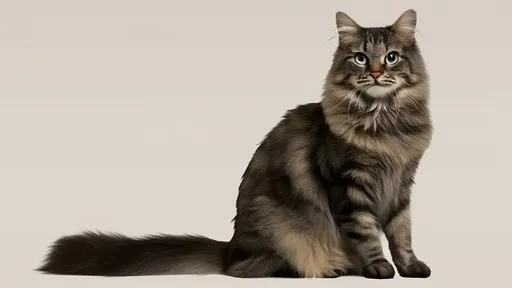
The American Wirehair is a breed that defies expectations at every turn. With its distinctive coat that feels more like steel wool than feline fur, this unusual cat has carved out a niche in the world of pedigreed pets. Unlike the plush softness of a Persian or the sleek smoothness of a Siamese, the Wirehair's springy, crimped fur provides a tactile experience unlike any other cat breed.

What makes the American Wirehair truly remarkable is the spontaneous genetic mutation that created its signature feature. In 1966, a single kitten with wiry fur was born in a litter of otherwise normal barn cats in upstate New York. This chance occurrence caught the attention of local breeders, who recognized the potential for an entirely new breed. Unlike many designer cats that result from careful crossbreeding, the Wirehair emerged fully formed from nature's own laboratory.

The science behind the coat reveals why these cats feel so different to the touch. Each hair shaft exhibits a unique kinking or bending pattern that creates the characteristic coarse texture. The guard hairs - normally straight and smooth in most cats - develop irregular hooks and bends. Even the whiskers often curl in whimsical corkscrews, adding to the breed's distinctive appearance. This isn't simply rough fur; it's an entirely different hair structure that resists lying flat against the body.

Beneath that wiry exterior lies a cat with surprising personality contrasts. Many owners describe their Wirehairs as having "velcro personalities" - simultaneously independent yet deeply attached to their human companions. They tend to be less vocal than other breeds, expressing themselves through subtle body language and gentle head butts rather than constant meowing. Their playful nature often persists well into adulthood, making them entertaining lifelong companions rather than kittens who quickly outgrow their mischievous phases.

Grooming a Wirehair presents unique challenges and rewards. Unlike long-haired breeds that require daily brushing to prevent mats, the Wirehair's coat naturally resists tangling. However, that doesn't mean they're maintenance-free. Special care must be taken to preserve the texture of their coat - over-brushing can actually soften the wiry quality that defines the breed. Many owners find that simply running their fingers through the coat helps distribute natural oils while maintaining the characteristic springiness.

The breed's development wasn't without controversy. Early breeders debated whether to outcross with American Shorthairs to expand the gene pool or maintain strict purity. Some worried that widening the breeding base might dilute the very wire coat that made the breed unique. These discussions mirrored larger conversations in the feline fancy about how to balance genetic diversity with breed characteristics - a tension that continues to this day in many rare breeds.

What truly sets the American Wirehair apart is how its physical uniqueness translates into lived experience. Owners frequently report that visitors do double-takes when first petting their cats. The initial surprise often gives way to fascination as people discover how the coarse coat seems to change texture depending on which direction it's stroked. Some compare it to petting a well-worn tennis ball or a dense scouring pad - comparisons that might sound unflattering but actually speak to the breed's singular charm.

Beyond texture, the coat serves practical purposes. Many Wirehair owners in colder climates report that their cats seem exceptionally well-insulated against winter weather. The dense, springy fur traps air more effectively than smoother coats, creating natural insulation. This may explain why the breed thrives in various climates despite originating in snowy New York. That wiry coat also tends to shed less conspicuously than other breeds, though no cat is truly hypoallergenic despite common misconceptions.

The American Wirehair's relative rarity adds to its mystique. While not as obscure as some newer breeds, it remains far less common than its cousin the American Shorthair. This scarcity means many cat enthusiasts go their entire lives without encountering one in person. Those who do often become passionate advocates for the breed, drawn to its combination of unusual physicality and delightful personality.

Perhaps what's most remarkable about these cats is how their unique coat seems to mirror their temperament - unconventional yet not off-putting, distinctive without being off-putting. In a world of increasingly engineered cat breeds, the American Wirehair stands as a testament to nature's ability to surprise us with spontaneous creations. From a single barn cat mutation to a recognized breed with devoted followers, their story reminds us that sometimes the most extraordinary things come from the unlikeliest beginnings.

For those considering adding an American Wirehair to their family, the experience promises to be unlike any other feline relationship. These cats don't just look different - they engage the senses in novel ways, from the surprising resistance of their coat under your fingers to their quiet but profound displays of affection. In a species known for its elegance and grace, the Wirehair offers something refreshingly different: a cat that celebrates texture, resilience, and the beauty of happy accidents in evolution.
Recommend Posts
Pet

The Enigma of Disappearing Clavicles: How Cats Contort to Slip Through Tight Spaces

By /Jun 12, 2025

The mystery of how cats seem to defy the laws of physics by slipping through impossibly narrow spaces has long fascinated both pet owners and scientists alike. Unlike humans, whose rigid skeletal structure limits flexibility, cats possess an almost supernatural ability to compress their bodies. This phenomenon, often referred to as the "disappearing clavicle" trick, is rooted in their unique anatomy and evolutionary adaptations.
Pet

Differences in Pain Perception in Cats: Why Do They Often Remain Silent When Injured?

By /Jun 12, 2025

For millennia, cats have maintained an air of mystery that both fascinates and frustrates their human companions. Among their many enigmatic behaviors, one of the most puzzling is their tendency to remain silent when injured or in pain. Unlike dogs, which often whimper or vocalize discomfort, cats frequently endure suffering in stoic silence. This behavioral difference stems from a complex interplay of evolutionary biology, neurophysiology, and species-specific survival strategies that have shaped feline pain responses over thousands of years.
Pet

Deciphering the Feline Skin Barrier: How Sebaceous Glands Create a Waterproof Coat"

By /Jun 12, 2025

The feline skin barrier is a marvel of biological engineering, a complex ecosystem that serves as the first line of defense against environmental threats. At the heart of this system lies the sebaceous gland, an unsung hero responsible for crafting what can only be described as nature's perfect "waterproof coat." This intricate mechanism not only keeps cats dry but also maintains their signature sleek appearance while protecting them from microbial invaders.
Pet

Feline Super Mitochondria: The Energy Engine Behind Explosive Power

By /Jun 12, 2025

The animal kingdom is filled with extraordinary examples of evolutionary adaptations, but few are as mesmerizing as the explosive power displayed by felines. From the lightning-fast pounce of a domestic cat to the breathtaking sprint of a cheetah, these creatures possess an almost supernatural ability to generate bursts of energy. The secret behind this remarkable capability lies deep within their cells—in the mitochondria, the microscopic power plants that fuel every movement.
Pet

The Genetic Code for Cat Coat Colors: How Melanocytes Draw Tabby and Pointed Patterns

By /Jun 12, 2025

The intricate patterns adorning a cat's coat – from bold tiger stripes to delicate color points – represent one of nature's most fascinating biological canvases. Behind these artistic expressions lies a complex genetic choreography where melanocytes (pigment-producing cells) dance to the tune of molecular signals, creating living masterpieces that have captivated humans for millennia.
Pet

The Night Vision Gene in Cats: How Does the Light Amplifier" in Rod Cells Work?

By /Jun 12, 2025

The feline ability to see in near-total darkness has long fascinated scientists and cat lovers alike. At the heart of this remarkable capability lies an ingenious biological mechanism within the rod cells of their retinas – a natural "light amplifier" that pushes the boundaries of low-light vision. Unlike human eyes that struggle in dim conditions, cats possess evolutionary adaptations that make them formidable nocturnal hunters.
Pet

Nutritional Formula for Large Cats (Siberian/Norwegian Forest)

By /Jun 12, 2025

When it comes to large cat breeds like the Siberian and Norwegian Forest cats, their nutritional needs are as majestic as their appearance. These feline giants require carefully balanced diets to maintain their robust health, luxurious coats, and energetic lifestyles. Unlike their smaller domestic counterparts, these cats have evolved to thrive in harsh climates, which means their metabolism and dietary requirements differ significantly.
Pet

Sphynx Cat Sun Protection Manual: Skin Cancer Risk and Clothing Selection

By /Jun 12, 2025

The sun's rays bring warmth and light, but for hairless cat owners, they also bring a serious health concern. Unlike their furry counterparts, sphynx cats and other hairless breeds lack the natural protection that fur provides against ultraviolet radiation. This makes them particularly vulnerable to skin damage and even skin cancer if proper precautions aren't taken.
Pet

Anti-Tangle Guide for Long-Haired Breeds: From Persian to Balinese

By /Jun 12, 2025

For cat owners who adore long-haired breeds, the luxurious coats of Persians, Maine Coons, or Balinese cats are undoubtedly part of their charm. However, that beautiful fur comes with a price – the constant battle against tangles and mats. Unlike their short-haired counterparts, these feline aristocrats require dedicated grooming routines to maintain their magnificent manes. The journey from Persian to Balinese represents a spectrum of long-haired breeds, each with unique coat textures and grooming challenges that demand tailored approaches.
Pet

Caring for the Curls: How to Protect Your Coton de Tulear's Lamb Wool"

By /Jun 12, 2025

The whimsical charm of a Selkirk Rex, with its distinctive corkscrew curls and plush coat, has captivated cat enthusiasts worldwide. Often referred to as the "sheep cat" for its resemblance to a fluffy lamb, this breed requires specialized care to maintain its unique appearance and overall health. Unlike other feline companions, the Selkirk Rex demands a tailored approach to grooming, nutrition, and environmental enrichment to thrive. Understanding the nuances of their care ensures these curly-coated darlings remain as healthy as they are adorable.
Pet

Royal Cats: From Louis XV to Queen Victoria

By /Jun 12, 2025

Throughout history, the lives of monarchs have often been intertwined with their beloved pets, and few animals have enjoyed as privileged a position as the cats favored by royalty. From the courts of Louis XV to the reign of Queen Victoria, felines have been cherished companions, symbols of status, and even political players in their own right. These regal pets were more than mere animals—they were extensions of the monarchs themselves, embodying elegance, mystery, and power.
Pet

猫咪毛色地理学:寒冷地区深色猫更多?

By /Jun 12, 2025

The distribution of cat coat colors across different geographical regions has long fascinated biologists and cat enthusiasts alike. One particularly intriguing observation is the apparent prevalence of darker-furred felines in colder climates. This phenomenon raises compelling questions about evolutionary adaptation, genetic selection, and the interplay between environment and animal physiology.
Pet

The Chartreux Cat: The Grey Muse" in the Eyes of French Poets

By /Jun 12, 2025

The Chartreux cat, with its plush blue-gray coat and enigmatic copper eyes, has long been a muse to French poets and artists, earning it the moniker "the gray muse." This feline, shrouded in legend and elegance, embodies a quiet sophistication that has inspired creative minds for centuries. Its presence in literature and art is not merely decorative but symbolic, representing mystery, independence, and an almost philosophical serenity.
Pet

Tricolor Cats in Japan: The Sailors' Belief in Maneki-neko"

By /Jun 12, 2025

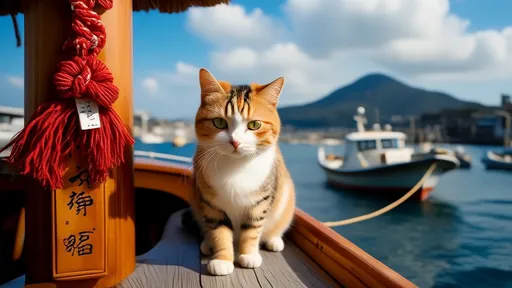
In the bustling ports of Japan, where the sea meets the land, an unexpected guardian watches over the sailors and fishermen—the calico cat. Known for their striking tri-colored coats, these feline companions have long been regarded as symbols of good fortune among seafarers. Their presence aboard ships is not merely coincidental; it is deeply rooted in tradition, superstition, and an unshakable belief that these cats bring luck, safety, and prosperity to those who brave the unpredictable waters.
Pet

The History of Black Cat Discrimination: From Medieval Witchcraft to Modern Redemption

By /Jun 12, 2025

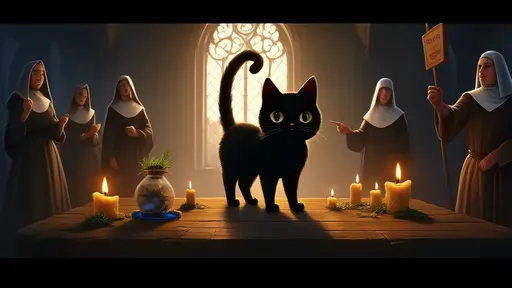
The history of black cats is a tapestry woven with threads of superstition, fear, reverence, and eventual redemption. From their association with witchcraft in medieval Europe to their modern-day status as beloved pets and symbols of good luck, these enigmatic felines have endured a complex relationship with humanity. Their journey through the centuries reflects our evolving attitudes toward the unknown, the mystical, and the misunderstood.
Pet

American Wirehair: The Curious Coat of Steel-Wool-like Texture

By /Jun 12, 2025

The American Wirehair is a breed that defies expectations at every turn. With its distinctive coat that feels more like steel wool than feline fur, this unusual cat has carved out a niche in the world of pedigreed pets. Unlike the plush softness of a Persian or the sleek smoothness of a Siamese, the Wirehair's springy, crimped fur provides a tactile experience unlike any other cat breed.
Pet

Havana Brown Cat: Chocolate Fur and Witchcraft Legends

By /Jun 12, 2025

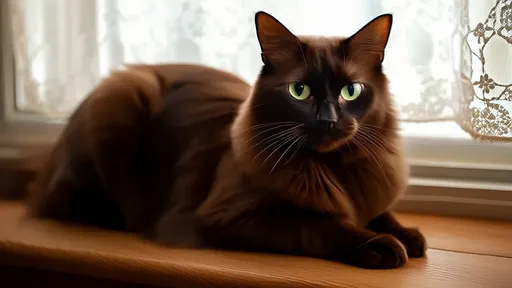
The Havana Brown cat, with its rich chocolate-colored coat and mesmerizing green eyes, has long been a subject of fascination. This breed, often described as the "Swiss Chocolate" of the feline world, carries an air of mystery that transcends its physical beauty. Beyond its striking appearance, the Havana Brown is shrouded in legends and folklore, particularly those linking its unique coloration to ancient witchcraft and mystical practices. The interplay between its elegant demeanor and the darker tales surrounding it makes this breed one of the most intriguing in the cat kingdom.